Fly Control
Fly Control Services
Flies are more than a nuisance. They carry bacteria and pathogens on their bodies, contaminating food and surfaces wherever they land. When flies appear in your home or business, the problem is usually bigger than the few insects you see. Northwest Termite & Pest Control provides professional fly control services throughout Belfair and the surrounding communities. We identify the species, locate the breeding source, and apply targeted treatment to eliminate the infestation. To request service, call us at 877-284-6972 or contact us online.
Common Fly Species in Western Washington
Not all flies are the same. The species determines where they breed and how to eliminate them. Here in the Pacific Northwest, these are the flies that cause the most problems for homeowners and businesses.
House Flies
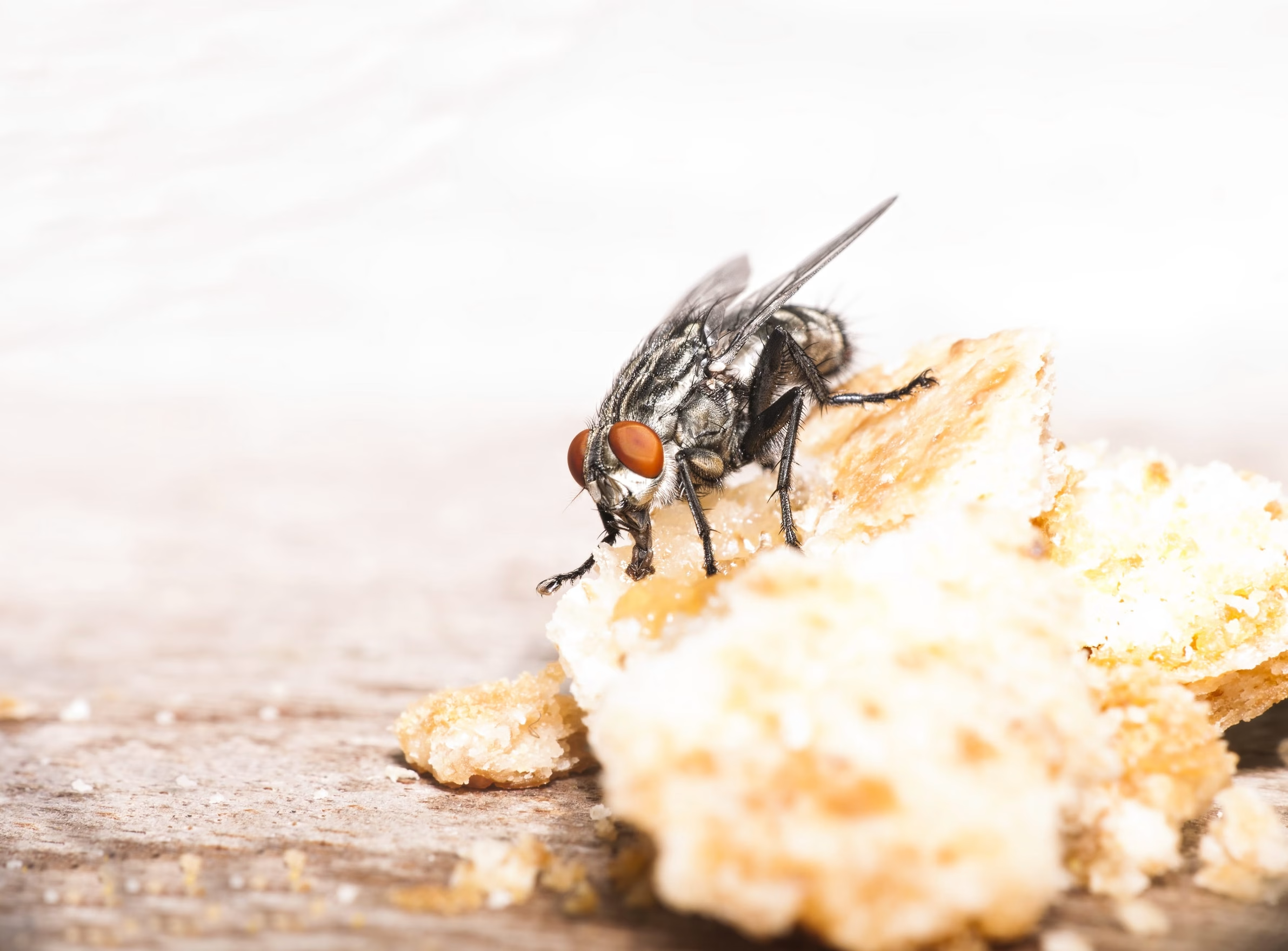
House flies are the most common fly species found indoors. They are gray with four dark stripes on the thorax and measure about one-quarter inch long. Because they breed in garbage, manure, and decaying organic matter, they are common around trash cans, compost piles, and pet waste.
House flies can carry more than 100 different pathogens, including bacteria that cause food poisoning and other illnesses. Since they regurgitate and defecate on food surfaces every time they land, they are a serious health concern in kitchens and food service settings.
Fruit Flies
Fruit flies are small, tan or brown flies with red eyes. They are attracted to overripe fruit, fermenting liquids, and sugary residues. Because they breed rapidly, a few fruit flies can become a full-blown infestation within days.
Fruit flies often enter homes on produce from the grocery store. Once inside, they breed in drains, trash cans, recycling bins, and anywhere organic matter accumulates.
Drain Flies
Drain flies — also called moth flies — are small, fuzzy flies that breed in the organic sludge that accumulates inside drains. They are common in bathrooms, kitchens, and basements. Because their larvae feed on the slime layer inside pipes, treating the visible flies without addressing the drain buildup will not solve the problem.
Blow Flies
Blow flies are larger than house flies, with metallic blue, green, or bronze bodies. They breed in decaying meat and animal matter. When blow flies appear suddenly indoors, they often indicate a dead animal in a wall void, attic, or crawl space.
Why Fly Problems Develop in Belfair
Flies do not appear randomly. They follow food sources, moisture, and breeding sites. Therefore, understanding what attracts them is the first step toward effective control.
Sanitation Issues Attract Flies
Because flies breed in decaying organic matter, poor sanitation is the most common cause of fly problems. Garbage cans without tight-fitting lids, compost piles near the home, and pet waste left outdoors all provide breeding sites.
Moisture Problems Create Breeding Sites
Many fly species, particularly drain flies, breed in moist environments. Because leaky pipes, clogged drains, and standing water create ideal conditions for fly larvae to develop, addressing moisture is essential.
Seasonal Activity Increases Fly Populations
Fly activity peaks during warmer months when breeding cycles accelerate. Since flies can complete a generation in as little as seven to ten days, populations can explode quickly without intervention.
Entry Points Allow Flies Indoors
Open windows, torn screens, and gaps around doors allow flies to enter. Once inside, they find food and moisture sources that sustain the infestation.
Signs You Have a Fly Problem
Not every fly sighting means an infestation. However, these signs indicate a problem that requires professional attention:
-
Frequent fly sightings — Multiple flies appearing consistently indoors
-
Flies around drains — Small, fuzzy flies near sinks, showers, or floor drains
-
Flies in trash areas — Large numbers of flies around garbage cans or recycling bins
-
Larvae or maggots — Small, worm-like creatures in trash, drains, or decaying matter
-
Flies in clusters — Groups of flies gathered near windows, doors, or food sources
-
Sudden appearance of large flies — Blow flies appearing indoors may indicate a dead animal
If you are dealing with any of these signs, professional inspection can identify the source and the appropriate treatment.
Health Risks Associated With Flies
Flies are not just annoying. Because they feed on decaying matter and then land on food and surfaces, they transfer bacteria and pathogens. Flies can carry:
-
Salmonella and E. coli
-
Shigella and other foodborne pathogens
-
Parasites and their eggs
-
Viruses that cause diarrheal illness
Because of these risks, fly control is especially important in kitchens, restaurants, food processing facilities, and anywhere food is prepared or stored.
Our Fly Control Process in Belfair
Effective fly control begins with identifying the species and locating the breeding source. Here is how our process works.
Step 1: Species Identification
We start by identifying the fly species. Because different species breed in different locations, proper identification determines the treatment approach.
Step 2: Source Location
We locate the breeding source. For fruit flies, this may be a recycling bin or drain. For drain flies, it is the organic buildup inside pipes. For blow flies, it may be a dead animal in a wall void or attic.
Step 3: Targeted Treatment
We apply treatments to breeding sites, entry points, and areas where flies congregate. Because treating only the visible flies without addressing the source will not solve the problem, source treatment is essential.
Step 4: Drain Treatment
For drain flies, we treat the organic sludge inside drains where larvae develop. This addresses the source, not just the adult flies.
Step 5: Prevention Guidance
We provide recommendations to reduce future fly activity, including sanitation improvements, moisture control, and entry point sealing.
What to Expect During Treatment
Knowing the process makes it easier to prepare.
Before treatment. We ask about fly activity — where you see them, when they appear, and what species they resemble. Clear access to drains, trash areas, and potential breeding sites helps us work efficiently.
During treatment. Depending on the species, we may apply treatments to drains, breeding sites, and entry points. We explain what we are doing and what to expect.
After treatment. Fly activity may continue for a few days as the treatment takes effect. Because source elimination is key, results depend on addressing the underlying conditions. We will tell you what to expect.
Prevention guidance. We explain what you can do to reduce the conditions that attract flies.
Prevention Tips for Belfair Homeowners
While professional treatment eliminates an active fly infestation, prevention reduces the risk of future problems.
-
Keep garbage sealed. Use tight-fitting lids on trash cans and clean them regularly.
-
Clean drains regularly. Flush drains with hot water and use drain cleaners to prevent organic buildup.
-
Store produce properly. Refrigerate ripe fruit and vegetables. Check for overripe items regularly.
-
Fix moisture issues. Repair leaks and eliminate standing water that attracts flies.
-
Seal entry points. Repair torn screens and seal gaps around doors and windows.
-
Clean up pet waste. Remove pet waste promptly, especially in warmer months.
If rodents are contributing to sanitation problems, our rodent control service can help address that underlying issue. If cockroaches are also present, our cockroach control service addresses similar sanitation-related problems.
Seasonal Fly Activity in Western Washington
Understanding seasonal patterns helps you anticipate fly problems and take action before they become serious.
Spring
Fly activity increases as temperatures warm. Because breeding cycles accelerate, populations begin to grow. This is a good time to inspect for potential breeding sites and address sanitation issues.
Summer
Fly populations peak during summer. This is when fly activity is most noticeable and when infestations develop most quickly. Because flies breed rapidly in warm weather, prompt treatment is essential.
Fall
Fly activity decreases as temperatures drop. However, flies may seek shelter indoors as outdoor temperatures cool. This is a good time to seal entry points.
Winter
Fly activity is minimal outdoors, but indoor infestations can continue in heated spaces. Because drain flies and fruit flies breed indoors year-round, they remain a problem regardless of season.
Areas We Serve
Northwest Termite & Pest Control serves Belfair and communities throughout the region.
Belfair
Fly Control in Belfair, WA
Bremerton
Fly Control in Bremerton, WA
Port Orchard
Fly Control in Port Orchard, WA
Shelton
Fly Control in Shelton, WA
Gig Harbor
Fly Control in Gig Harbor, WA
Silverdale
Fly Control in Silverdale, WA
Seabeck
Fly Control in Seabeck, WA
Grapeview
Fly Control in Grapeview, WA
Tahuya
Fly Control in Tahuya, WA
Hoodsport
Fly Control in Hoodsport, WA
If you do not see your community listed, give us a call at 877-284-6972 to confirm whether we serve your area.
Related Services
Fly control often connects to other pest problems and home issues. If your situation involves any of the following, we can help directly:
-
Pest Control — comprehensive pest management for homes and businesses
-
Rodent Control — rodents can contribute to sanitation problems that attract flies
-
Cockroach Control — cockroaches also breed in moist, unsanitary conditions
-
Ant Control — ants are attracted to many of the same food sources as flies
-
Bee Control — for honeybee problems, where relocation is the preferred solution
-
Spider Control — reducing spider activity indoors and out
Questions Homeowners Ask
Why do I have so many flies in my house?
Flies breed in decaying organic matter, moisture, and unsanitary conditions. If you are seeing large numbers of flies indoors, there is likely a breeding source — such as a drain, trash can, or dead animal — that needs to be located and eliminated.
What is the difference between fruit flies and drain flies?
Fruit flies are small and tan with red eyes. They breed in overripe fruit and fermenting liquids. Drain flies are fuzzy and moth-like. Because they breed in the organic sludge inside drains, they require different treatment approaches.
How do I get rid of drain flies?
Drain flies breed in the organic buildup inside pipes. Because treating only the visible flies will not solve the problem, the drain itself must be treated to eliminate the larvae and breeding site.
Are flies dangerous?
Flies carry bacteria and pathogens on their bodies. Because they land on food and surfaces after feeding on decaying matter, they can spread foodborne illnesses. Fly control is especially important in kitchens and food service settings.
How long does fly treatment take to work?
Because fly populations depend on breeding sources, results vary. Once the source is eliminated, adult flies die off within a few days. We will explain what to expect for your specific situation.
Do I need to leave my home during treatment?
For most fly treatments, you do not need to leave. We will advise you on any specific precautions for your situation.
Why Choose Northwest Termite & Pest Control?
When you hire Northwest Termite & Pest Control, you’re choosing a local company that’s committed to providing more than just pest treatments—you’ll receive personalized service from experienced professionals who genuinely care about protecting your home.
Our owners remain actively involved in the business and personally perform many inspections and treatments, ensuring every customer receives the attention to detail and quality workmanship that have defined our company since 2007.
We use environmentally responsible products whenever possible, customize every treatment plan, and back our work with a satisfaction guarantee.
Whether you need a one-time service or year-round pest protection, you can count on Northwest Termite & Pest Control to keep your home or business protected from unwanted pests.
Contact us today to schedule your inspection and discover why so many homeowners and businesses throughout Kitsap and Mason Counties trust Northwest Termite & Pest Control for dependable, effective pest management.