Hornet & Yellow Jacket Control
Hornet & Yellow Jacket Control Services
Yellow jackets and hornets are the most aggressive stinging insects in the Pacific Northwest. Unlike bees, they can sting repeatedly, and they release alarm pheromones that signal the entire colony to attack. When you find a nest on your property, attempting removal yourself is dangerous. Northwest Termite & Pest Control provides professional hornet and yellow jacket control throughout Belfair and the surrounding communities. We locate the nest, apply targeted treatment, and remove the threat safely. To request service, call us at 877-284-6972 or contact us online.
Yellow Jackets vs. Hornets: Understanding the Threat
The Pacific Northwest is home to several species of social wasps. The most common problem species are yellow jackets and bald-faced hornets. While they differ in appearance and nesting habits, both pose serious risks when they nest near human activity.
Yellow Jackets
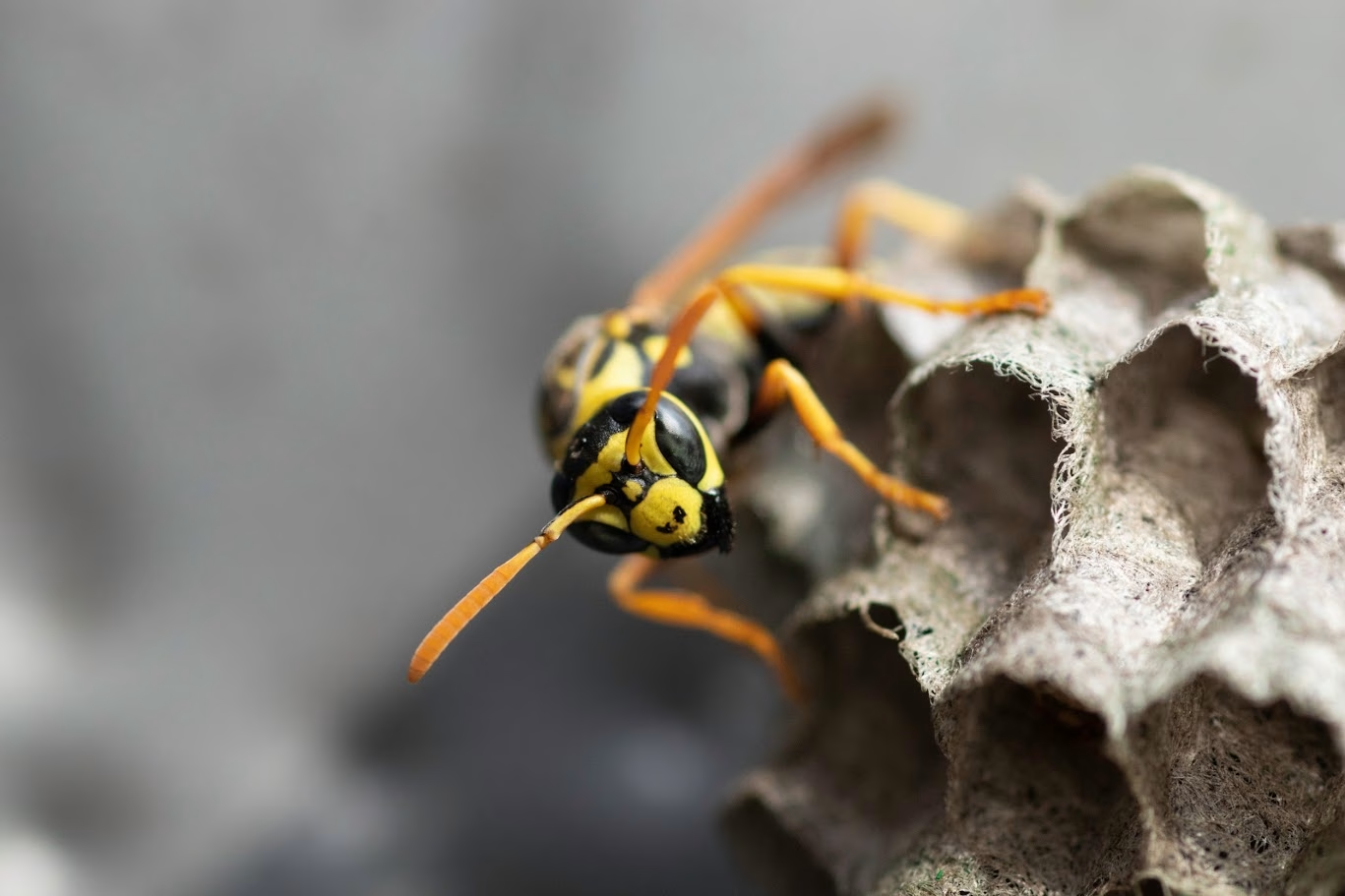
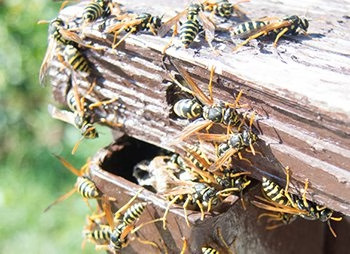
Yellow jackets are the most aggressive and persistent stinging insects in the region. They are identified by their yellow and black markings and narrow waists. Because yellow jackets build nests in the ground, in wall voids, under decks, and in landscaping timbers, they can be difficult to spot. A single ground nest can contain several thousand workers by midsummer, and the visible entrance is only a fraction of the colony underground.
Yellow jackets scavenge for protein and sugar, making them common pests at picnics, garbage cans, and outdoor events. As summer progresses and natural food sources decline, they become more aggressive and more likely to sting.
Bald-Faced Hornets
Bald-faced hornets are larger than yellow jackets, with black bodies and white markings on the face and abdomen. They build large, paper-covered nests in trees, shrubs, or attached to buildings. By the end of summer, these nests can reach the size of a basketball.
Despite their size, bald-faced hornets are generally less aggressive than yellow jackets and rarely sting unless their nest is directly disturbed. However, since their nests are often located high in trees or under eaves, they are difficult to remove safely without professional equipment.
Why Ground Nests Are More Dangerous
Ground nests present unique dangers that aerial nests do not. Yellow jackets nesting underground respond strongly to vibrations from lawn mowers, weed trimmers, and footsteps. Because a single disturbance can trigger a defensive swarm of dozens or hundreds of wasps within seconds, ground nests are particularly hazardous. Since the nest chamber is often located several feet from the entrance, you may not realize you are standing near a nest until it is too late.
Signs You Have a Hornet or Yellow Jacket Problem
Finding a nest is not always obvious until someone gets stung. Here are the warning signs to watch for:
-
A steady stream of insects flying in and out of a single hole in the ground, wall, or eave
-
A distinct buzzing sound when you stand near a specific area of your yard
-
Pets acting nervous around one section of the yard, especially near dusk
-
Heavy insect traffic around outdoor lights, garbage cans, or food sources
-
A visible paper nest in a tree, shrub, or under an eave
If you notice any of these signs, do not attempt to investigate or disturb the area. Back away slowly and call a professional.
Why DIY Nest Removal Is Dangerous
Store-bought sprays and DIY methods are not just ineffective for ground nests — they can make the situation far worse.
What Goes Wrong
Generic wasp sprays kill the workers you can see but do not reach the colony underground. Because the queen survives, the nest rebuilds within days.
Flooding the nest with a hose drives wasps out and triggers a defensive swarm.
Gasoline or accelerants are ineffective and pollute the soil and groundwater.
Knocking down the nest without treatment causes the colony to rebuild immediately in the same location.
The Real Risk
Multiple stings are the primary danger. A few stings cause pain and swelling. Twenty or more stings in a short period can cause a medical emergency, even in people without allergies. For individuals with wasp venom allergies, a single sting can be life-threatening.
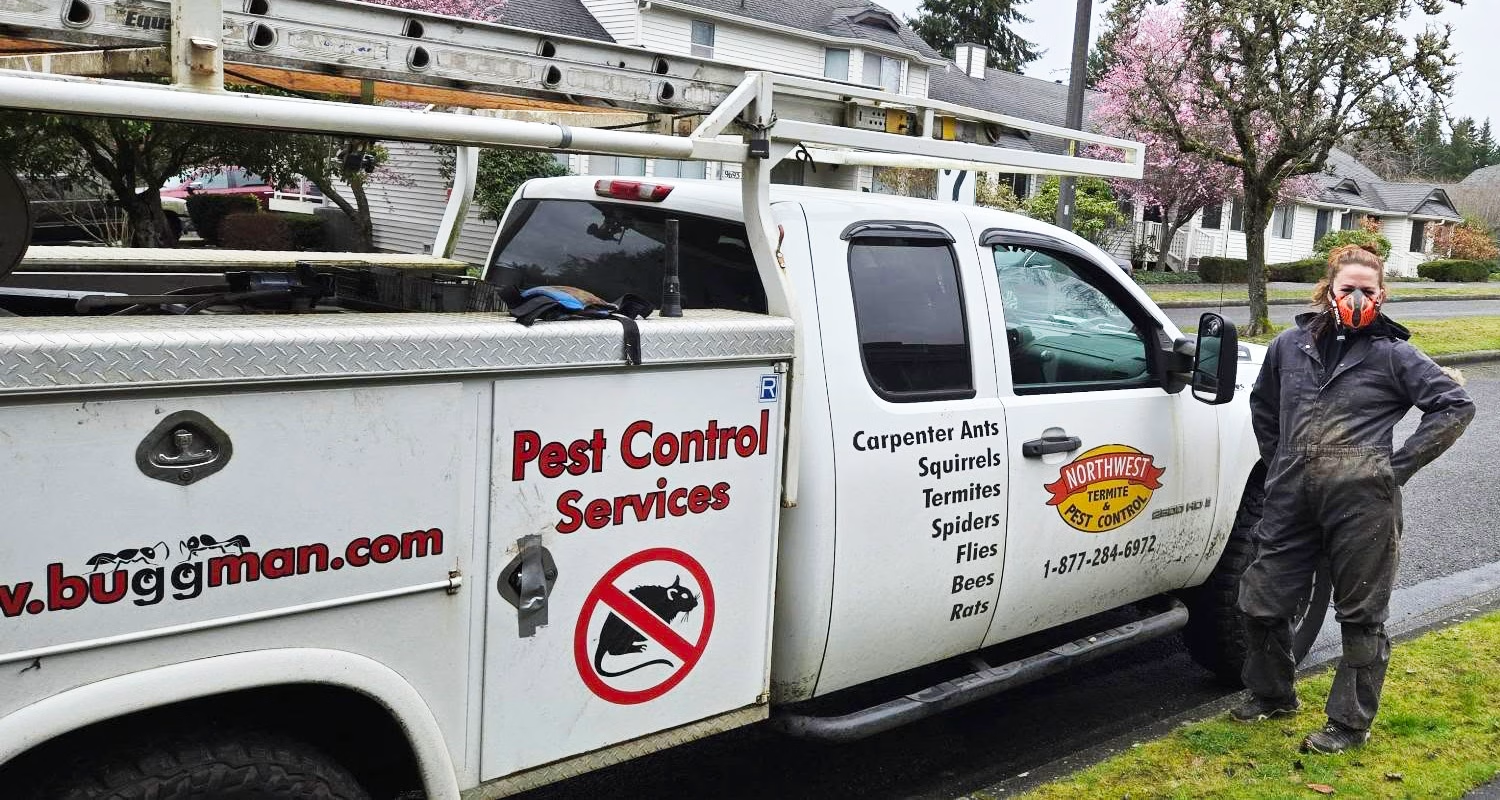
Our Hornet & Yellow Jacket Control Process
We take a systematic approach that prioritizes safety and ensures the colony is eliminated.
Step 1: Identification and Assessment
We begin by confirming the insect species and locating the nest. Because yellow jackets and bald-faced hornets require different treatment approaches, proper identification is essential. Ground nests require different techniques than aerial nests.
Step 2: Timing the Treatment
Treatment is most effective at dusk or dawn, when workers are inside the nest and activity is minimal. This timing reduces the risk of encountering aggressive wasps during application.
Step 3: Targeted Treatment
For ground nests, we apply a product directly into the entrance that spreads through the colony. The workers carry it back into the chamber, reaching the queen and collapsing the nest over the next 24 to 48 hours. For aerial nests, we use a similar approach with equipment designed for elevated access.
Step 4: Nest Removal and Area Cleanup
Once the colony is eliminated, we remove the physical nest and clean the area. Because residual pheromones can attract new colonies, thorough cleanup reduces the chance of reinfestation in the same location.
Step 5: Follow-Up
We monitor the area for several days to confirm the treatment was effective. If activity continues, we re-inspect for additional nests.
Seasonal Hornet and Yellow Jacket Activity
Understanding seasonal patterns helps you anticipate problems and take action before they become serious.
Spring
Queens emerge from winter dormancy and begin building new colonies. Because this is the best time to use pheromone traps to capture queens before they establish nests, spring prevention is key. Wasp preventative spray can be applied to areas susceptible to infestation, such as peaks and around soffits, to deter nesting.
Summer
Colonies grow rapidly and reach peak population by late summer. This is when yellow jackets become most aggressive and when nests are largest.
Fall
As natural food sources decline, yellow jackets become more persistent around human food sources. Consequently, workers become more aggressive and irritable.
Winter
Freezing temperatures kill off the colony. Since nests are not reused the following year, this is the safest time to remove old nests if they are accessible.
Prevention Tips for Homeowners
While professional treatment resolves an active nest problem, prevention reduces the risk of future issues.
-
Seal entry points. Fill gaps and cracks in exterior walls, especially around eaves, soffits, and siding.
-
Use tight-fitting trash can lids. Yellow jackets are attracted to food and food odors. Keep garbage containers sealed.
-
Clean up food and drink promptly. Do not leave sugary drinks or food outdoors.
-
Use pheromone traps in spring. These capture queens before they establish new colonies.
-
Inspect your property regularly. Look for ground holes, wall voids, and early nest formation. If rodents have created entry points, our rodent control service can help seal them.
Areas We Serve
Northwest Termite & Pest Control serves and communities throughout the region.
Belfair
Hornet & Yellow Jacket Control in Belfair, WA
Bremerton
Hornet & Yellow Jacket Control in Bremerton, WA
Port Orchard
Hornet & Yellow Jacket Control in Port Orchard, WA
Shelton
Hornet & Yellow Jacket Control in Shelton, WA
Gig Harbor
Hornet & Yellow Jacket Control in Gig Harbor, WA
Silverdale
Hornet & Yellow Jacket Control in Silverdale, WA
Allyn
Hornet & Yellow Jacket Control in Allyn, WA
Seabeck
Hornet & Yellow Jacket Control in Seabeck, WA
Grapeview
Hornet & Yellow Jacket Control in Grapeview, WA
Tahuya
Hornet & Yellow Jacket Control in Tahuya, WA
Union
Hornet & Yellow Jacket Control in Union, WA
Hoodsport
Hornet & Yellow Jacket Control in Hoodsport, WA
If you do not see your community listed, give us a call at 877-284-6972 to confirm whether we serve your area.
Related Services
Hornet and yellow jacket control often connects to other pest problems. If your situation involves any of the following, we can help directly:
-
Pest Control — comprehensive pest management for homes and businesses
-
Bee Control — for honeybee problems, where relocation is the preferred solution
-
Ant Control — carpenter ants also damage wood and may be confused with flying insects
-
Termite Control — inspection and treatment for wood-destroying insects
-
Rodent Control — rodents can create moisture problems and entry points
-
Spider Control — reducing spider activity indoors and out
Questions For Homeowners Ask
How dangerous are yellow jackets?
Yellow jackets are aggressive and can sting repeatedly without dying. They release alarm pheromones that trigger the entire colony to attack. Multiple stings can cause a medical emergency, especially for individuals with allergies. If you are dealing with bees instead, our bee control page explains the differences.
Can I remove a yellow jacket nest myself?
For ground nests, DIY removal is extremely dangerous and often ineffective. Store-bought sprays do not reach the colony, and disturbing the nest triggers a defensive swarm. Professional removal is strongly recommended.
What is the difference between a yellow jacket and a hornet?
Yellow jackets are smaller with distinct yellow and black markings. Bald-faced hornets are larger with black bodies and white face markings. Both are social wasps that can sting repeatedly.
How long does treatment take to work?
Treatment is applied directly into the nest, and the colony typically collapses within 24 to 48 hours. We monitor the area for several days to confirm effectiveness.
Are treatments safe for pets and children?
We use products according to manufacturer guidelines and will advise you on any precautions needed during and after treatment. Tell us about pets or sensitivities when you call.
Do yellow jackets come back to the same nest?
No. Yellow jacket and hornet colonies live a single year. Because the workers die off with the cold, the nest is not reused the following year. New queens start new nests in the spring.
Why Choose Northwest Termite & Pest Control?
When you hire Northwest Termite & Pest Control, you’re choosing a local company that’s committed to providing more than just pest treatments—you’ll receive personalized service from experienced professionals who genuinely care about protecting your home.
Our owners remain actively involved in the business and personally perform many inspections and treatments, ensuring every customer receives the attention to detail and quality workmanship that have defined our company since 2007.
We use environmentally responsible products whenever possible, customize every treatment plan, and back our work with a satisfaction guarantee.
Whether you need a one-time service or year-round pest protection, you can count on Northwest Termite & Pest Control to keep your home or business protected from unwanted pests.
Contact us today to schedule your inspection and discover why so many homeowners and businesses throughout Kitsap and Mason Counties trust Northwest Termite & Pest Control for dependable, effective pest management.